
L-DOPA: A Cornerstone in Parkinson’s Disease Therapy
- Pratham Gowda

- Aug 25, 2025
- 2 min read

-A glimpse into how two sides of dopamine — boosting it and blocking it — shape the fight against Parkinson’s and beyond.
Introduction
Parkinson's disease, a progressive neurological disorder, has touched the lives of some of the world's most beloved public figures, revealing their strength and resilience in the face of adversity. From the magnetic charm of Michael J. Fox, who turned his young-onset diagnosis into a powerful platform for advocacy, to the legendary spirit of boxing icon Muhammad Ali, these individuals have shown us that a diagnosis does not define a person. They, along with rock legend Ozzy Osbourne and vocal powerhouse Linda Ronstadt, have brought this condition into the public eye, raising awareness and inspiring hope. Their journeys are a testament to the courage it takes to live with Parkinson's, and they remind us of the urgent need for a cure. In this Blog I shall be explaining about the various drugs used for the management of Parkinson’s disease.

L-DOPA (L-3,4-dihydroxyphenylalanine) is the primary pharmacological agent used in the treatment of Parkinson’s disease (PD). It acts as a biochemical precursor to dopamine, compensating for the dopaminergic neuronal loss in the substantia nigra pars compacta.

Mechanism of Action
L-DOPA is actively transported across the blood-brain barrier via the large neutral amino acid transporter. Within the central nervous system, it undergoes decarboxylation by aromatic L-amino acid decarboxylase (DOPA decarboxylase) to form dopamine. The resultant dopamine replenishes striatal levels, restoring functional integrity of the nigrostriatal pathway and improving motor symptoms.
Adjunct Therapy
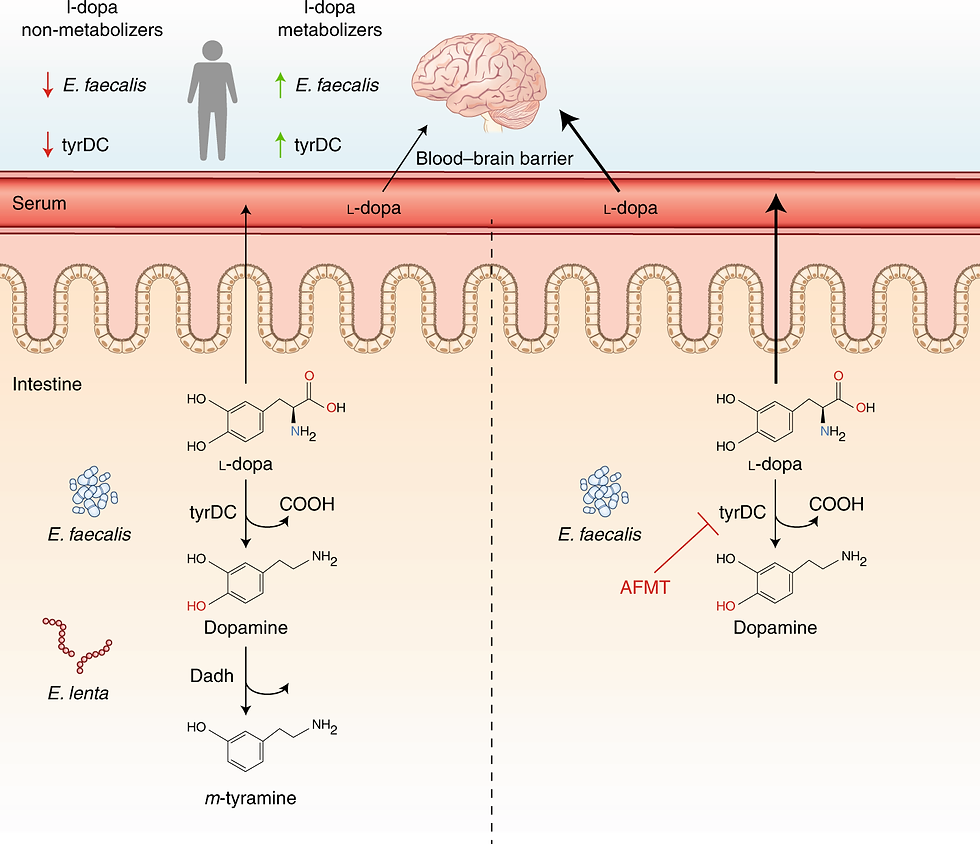
Peripheral decarboxylation of L-DOPA reduces its availability in the brain and induces systemic side effects. Co-administration with peripheral DOPA decarboxylase inhibitors such as carbidopa or benserazide minimizes peripheral metabolism, enhances central bioavailability, and reduces adverse effects such as nausea and hypotension.
Clinical Benefits
L-DOPA remains the most effective symptomatic treatment for bradykinesia, rigidity, and tremor. It improves quality of life in early and advanced PD stages, with clinical response typically observed within days to weeks.
Limitations and Complications
Long-term therapy leads to motor fluctuations (“on-off” phenomena) and levodopa-induced dyskinesias, attributed to disease progression and pulsatile dopaminergic stimulation. Psychiatric effects (hallucinations, impulse control disorders) may occur, especially in advanced PD.
Conclusion
L-DOPA continues to be the gold-standard therapy for Parkinson’s disease despite its long-term limitations. Future strategies focus on optimizing its delivery, enhancing continuous dopaminergic stimulation, and combining it with neuroprotective agents.
References
1. Olanow CW, Stern MB, Sethi K. The scientific and clinical basis for the treatment of Parkinson disease. Neurology. 2009;72(21 Suppl 4):S1-S136.2. Kalia LV, Lang AE. Parkinson's disease. Lancet. 2015;386(9996):896-912.3. Poewe W, Seppi K, Tanner CM, et al. Parkinson disease. Nat Rev Dis Primers. 2017;3:17013.
2. Kahn RS, et al. The effect of dopamine antagonists on psychotic disorders. Lancet Psychiatry. 2015;2(10):954–965.Leucht S, et al. Comparative efficacy and tolerability of antipsychotic drugs. Lancet. 2013;382(9896):951–962. Tarsy D, Baldessarini RJ. Movement disorders induced by dopamine antagonists. N Engl J Med. 2006;354:1863–1876.


Comments