
SLEEP PARALYSIS: The Science (and Myths) of Sleep Paralysis
- Syed Hamdan Muzammil
- Aug 27, 2025
- 3 min read


-A strange collision of dreaming and wakefulness, sleep paralysis traps the mind in a motionless body.
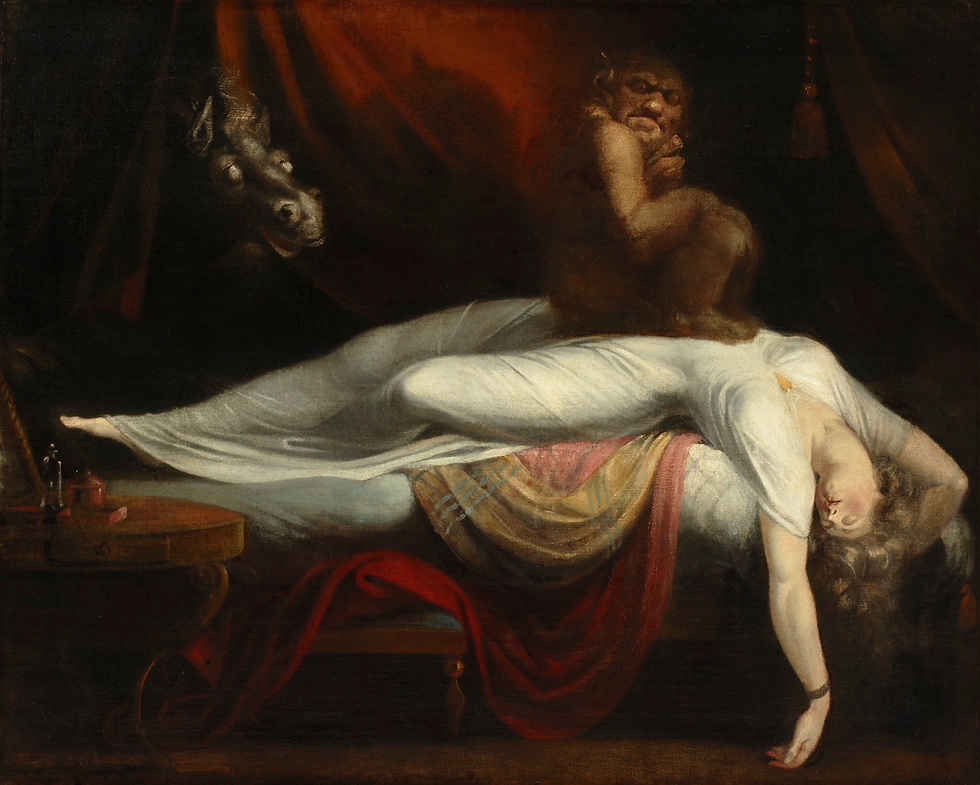
You notice it, a shape in the corner, watching. Your chest feels heavy, like something’s sitting on it. You try to scream, but no sound comes out.
If this sounds familiar to you, you’ve probably experienced sleep paralysis. A strange, often terrifying intertwining of sleep and wakefulness.
What Is Sleep Paralysis?
Sleep paralysis is a temporary inability to move or speak while you’re falling asleep or waking up. These episodes usually last from a few seconds to about two minutes, but in the moment, it feels much longer.
It happens when your brain wakes up from REM sleep (the dream stage) but your body is still in a protective state of muscle paralysis. This “dream paralysis” normally stops you from acting out and making movements in your dreams. But if you wake up before it wears off, you’re stuck in between the dream and real world.
The Science Behind the Scare
During REM sleep, the brain sends signals using neurotransmitters like GABA and glycine to inhibit motor neurons in your spinal cord. This creates REM atonia; a full-body shutdown of voluntary skeletal muscles.
In sleep paralysis, your brain regains awareness while REM atonia is still active. The result: you’re awake mentally, but physically frozen.
To make it feel more surreal, parts of your brain that create dream imagery are still firing, so hallucinations can blend into your waking perception. That’s why you might see or hear things that aren’t actually there.

Why It Feels Like a Horror Movie
The hallucinations during sleep paralysis tend to follow a few eerie patterns:
• Intruder hallucination: Sensing a presence in the room, often shadowy or looming.
• Incubus hallucination: Feeling pressure or weight on the chest, sometimes paired with a choking sensation.
• Vestibular-motor hallucination: Feeling like you’re floating, falling, or having an out-of-body experience.
Your fear gets amplified because you can’t move or defend yourself, turning a pretty harmless brain glitch into a full blown nightmare.

Triggers & Risk Factors
Anyone can experience sleep paralysis, but it’s more likely if you:
• Have irregular sleep patterns (shift work, jet-lag)
• Are sleep-deprived
• Experience lots of stress or anxiety
• Sleep on your back
• Have narcolepsy or other sleep disorders
• Have a family history of sleep paralysis
Myths & Cultural Interpretations
Sleep paralysis has been around for as long as humans have been sleeping and before science explained it, people obviously turned to the supernatural for answers.
• Europe: Old Hag syndrome — a witch sitting on your chest.
• Middle East: Encounters with the Jinn.
• Japan: Kanashibari — a vengeful spirit holding you down.
Surprisingly, many of these myths match the “intruder” or “incubus” hallucination patterns reported now.
How to Reduce Sleep Paralysis
While it’s usually harmless, frequent episodes can be traumatising. Here are some tips:
• Maintain a consistent sleep schedule.
• Limit caffeine and heavy meals before bed.
• Manage stress with relaxation techniques.
• Try sleeping on your side.
• Seek medical advice if episodes are frequent or severe.
Final Thoughts
Sleep paralysis omits the line between dream and reality in a way that can feel terrifying, but it’s simply a fascinating misfire or glitch in the sleep-wake cycle.
So if you ever wake up frozen, heart pounding, with a shadow at your bedside, remember, it’s not a ghost. It’s just your brain, still dreaming while you’re already awake.
References
1. Sharpless, B. A., & Barber, J. P. (2011). Lifetime prevalence rates of sleep paralysis: A systematic review. Sleep Medicine Reviews, 15(5), 311–315. https://doi.org/10.1016/j.smrv.2011.01.007
2. Cheyne, J. A., Rueffer, S. D., & Newby-Clark, I. R. (1999). Hypnagogic and hypnopompic hallucinations during sleep paralysis: Neurological and cultural construction of the night-mare. Consciousness and Cognition, 8(3), 319–337. https://doi.org/10.1006/ccog.1999.0404
3. Jalal, B., & Hinton, D. E. (2013). Sleep paralysis among Egyptian college students: Association with anxiety symptoms (PTSD, trait anxiety, pathological worry). Journal of Nervous and Mental Disease, 201(11), 871–877. https://doi.org/10.1097/NMD.0000000000000039


Comments