
Sugar Rush : Running on Candy Coated Chaos
- Ankitha Anilkumar

- Sep 9, 2025
- 3 min read

-When life gives you sugar, expect the crash
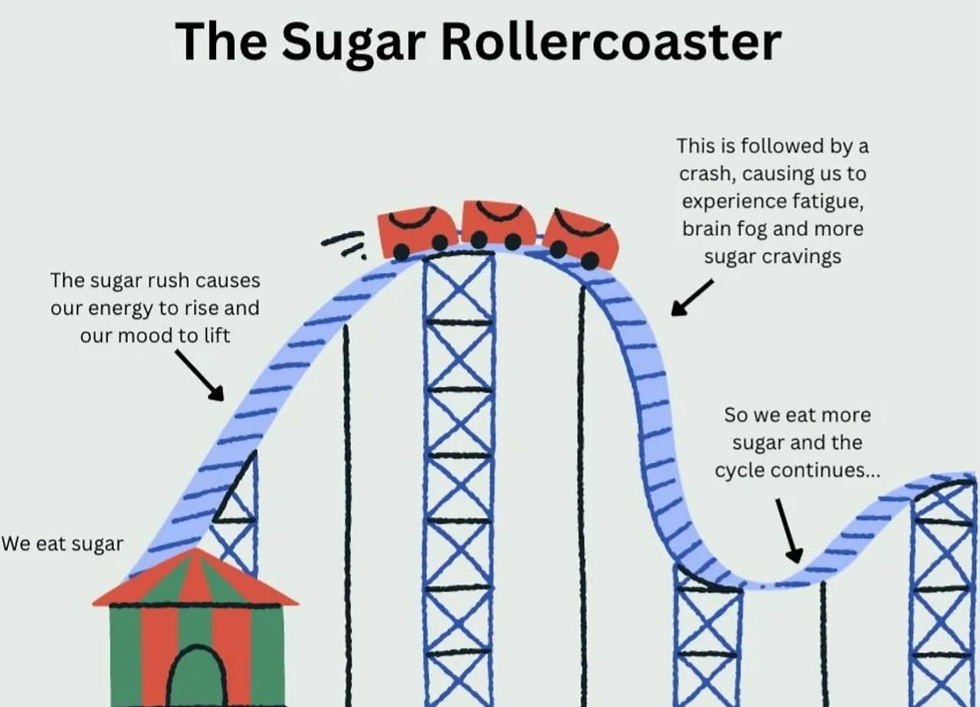
Certainly we all have relied on different forms of sugar to keep our body clock active and going, the jolt of energy that surges through us after ingesting a chocolate bar fills us with alacrity. Have you ever wondered why consuming food rich in carbohydrates, especially refined sugar leads to a temporary burst of energy and mood? In short, a spike tends to occur as sugar is absorbed rapidly prompting blood glucose levels to rise and prompting a large release of insulin. Generally, after this initial high most people also experience a sugar crash marked by fatigue and a drop in one's energy.
Now to break it down how exactly does a sugar rush occur?
Blood sugar levels rise swiftly after eating sweet food because the digestive tract rapidly converts the carbohydrates into glucose which is then absorbed into the bloodstream. This spike prompts the pancreas to rapidly release insulin, a hormone that helps transport glucose from the blood into cells for energy or storage. As cells metabolise the glucose, the inflow gives rise to a brief initial energy spike that some people refer to as a "sugar rush" but is actually the body's reaction to the fuel that is available. Insulin swiftly reduces blood glucose levels by transferring it into fat, muscle, and liver cells. The "sugar crash" that occurs following the surge is characterised by a sharp decline in blood sugar that can cause cravings, mental haze, and feelings of exhaustion.
Although each person's experience is unique, some frequently mentioned consequences of a sugar rush include :
1. Increased Energy: Some people may get a sudden energy surge after taking a large amount of sugar, feeling more alert and active than normal.
2. Restlessness: Especially in children, restlessness, fidgeting, and increased talkativeness are frequently seen.
3. Short Attention Span: Another sign of a sugar surge is having trouble focusing or staying focused.
4. Mood Swings: Sugar has a detrimental impact on mood and can quickly alter feelings, from pleasure and excitement to annoyance and anxiety.
5. Sugar Crash: Following the initial energy spike, blood sugar levels rapidly fall, resulting in fatigue, sluggishness, and a generalised sense of low energy. This occurs as once insulin does its job and clears sugar from our bloodstream a sharp drop in blood glucose is experienced. This is what often leads to:
Fatigue
Irritability
Hunger (especially sugar cravings)
Brain fog
This cycle can happen repeatedly if one regularly eats high-sugar foods, which can lead to energy instability, poor concentration, and over time, even metabolic imbalances.
Sugar crashes generally cause us to be incredibly distracted throughout the day, which leads to a lack of productivity and concentration. Confusion, atypical behavior, the inability to complete routine tasks, and blurred vision are also common symptoms, especially for those who have diabetes. People with diabetes may experience more severe symptoms such as loss of consciousness, seizures or coma, if the crash is harsh enough, because of their increased sensitivity to inconsistent sugar levels. For these reasons the occurrence of sugar rushes should be avoided.
What can we do to avoid the rollercoaster of a sugar rush?
1. Preserve Balanced Nutrition: Give top priority to eating a diet rich in fruits, vegetables, whole grains, lean meats, and other nutrients. This contributes to blood sugar stabilization and long-lasting energy.
2. Healthy Snacking: Choose snacks that are higher in fibre, protein, and good fats. These choices help to reduce abrupt spikes and dips in blood sugar levels by facilitating a steady release of sugar into the bloodstream.
3. Portion Control: Eat sugary snacks in sensible amounts to exercise moderation. Prioritize quality over quantity and concentrate on enjoying smaller amounts.
4. Food Combinations: When consuming sugary foods, think about consuming them with foods that are high in fibre or protein. This combination lessens the effect of sugar on blood sugar levels by slowing down its absorption.
5. Hydration: Drinking enough water can help regulate blood sugar levels and reduce cravings for sugary foods. Drink plenty of water throughout the day, and opt for hydration beverages like infused water or herbal teas for taste.
6. Physical Activity: Regular exercise can enhance insulin sensitivity and help regulate blood sugar levels. To keep an active lifestyle, try to incorporate cardiovascular exercises and strength training.
In conclusion, although a sugar rush may feel enjoyable at the time, it is actually one's body's reaction to an unexpected spike in energy, and that surge isn't sustainable. Protein-rich, sugar-free meals will always provide you with steady energy, whether your goal is performance or mental clarity. So the next time you are tempted by a quick sugar fix, try approaching the healthier alternative to fuel your body, thereby preventing the spike and crash.
References


Comments